



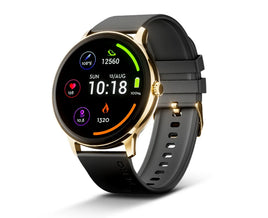
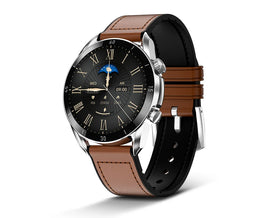
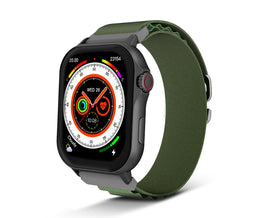
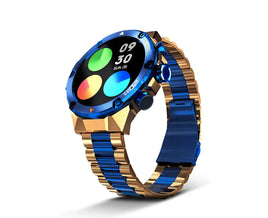


Smartwatches are no longer just notification screens for your wrist. They pack heart rate monitors, blood oxygen sensors, GPS chips, temperature sensors, and even ECG capabilities. But not all sensors are created equal, and the right watch for you depends entirely on what you actually need to measure and how precisely you need it measured.
If you have ever compared your smartwatch reading to a chest strap or a hospital pulse oximeter and wondered why the numbers did not match, you already know that sensor accuracy varies a lot between devices. Here is how to think through your choice.
Start With Your Actual Use Case
Before looking at spec sheets, get clear on what you are trying to track and why.
Casual fitness tracking. If you want a general sense of your daily steps, sleep patterns, and rough calorie burn, almost any modern smartwatch will do. Precision to the exact number matters less than consistency over time, since you are mostly looking at trends.
Serious endurance training. Runners, cyclists, and triathletes need accurate heart rate during high intensity intervals, reliable GPS for pace and distance, and often running dynamics like cadence or ground contact time. This is where sensor quality really starts to separate premium watches from budget ones.
Health monitoring. If you are tracking blood oxygen for sleep apnea concerns, monitoring heart rhythm for arrhythmia, or watching skin temperature for cycle tracking, you need sensors validated for that specific purpose, not just present on the spec sheet.
Medical grade needs. Some conditions require FDA cleared or CE marked features, such as ECG for atrial fibrillation detection. These are only found on a handful of watches, and even then they supplement rather than replace clinical devices.
Understand How Each Sensor Actually Works
Optical heart rate sensors use green (and sometimes red or infrared) LEDs that shine light into your skin and measure blood flow through light absorption. They work reasonably well at rest but can struggle during fast, repetitive wrist motion like running or lifting weights. Watches with more LEDs and better algorithms, often the higher end models in a lineup, tend to hold up better under these conditions.
GPS accuracy depends on the chipset and whether the watch supports multiple satellite systems (GPS, GLONASS, Galileo, and so on). Dual frequency GPS, found in higher tier sports watches, delivers noticeably better accuracy in tricky environments like dense forests or urban canyons with tall buildings.
Pulse oximeters (SpO2) measure blood oxygen saturation using similar light based technology. Accuracy can be affected by skin tone, tattoos, movement, and even how snug the watch fits. Consumer smartwatch SpO2 readings are generally intended for wellness insight rather than diagnosis.
Temperature sensors track skin temperature, not core body temperature, so they are better at detecting relative changes over time (useful for cycle tracking or illness detection) than giving you a single precise number.
ECG sensors require you to touch a specific point on the watch, completing an electrical circuit that reads your heart's rhythm over a short window. These are more clinically validated than optical sensors but still only capture a single lead, unlike a full 12 lead ECG in a hospital.
What Actually Affects Real World Accuracy
Sensor accuracy is not just about the hardware. A few practical factors matter just as much:
- Fit matters. A loose watch moves against your skin and introduces noise into optical readings. Wear it snug, especially during workouts.
- Skin tone and tattoos can affect how well light based sensors read blood flow, which is a known limitation across the industry.
- Wrist placement slightly above the wrist bone, rather than right on top of it, tends to improve heart rate accuracy for most people.
- Software matters as much as hardware. Two watches with similar sensors can produce different results depending on how their algorithms process and smooth the data.
Questions to Ask Before Buying
- Does this feature need clinical grade accuracy, or is trend tracking good enough for me?
- Has the manufacturer published validation studies or received regulatory clearance for the specific sensor I care about?
- Do independent reviews or comparisons back up the accuracy claims, especially during motion?
- Does the watch fit my wrist well, since poor fit undermines even the best sensor?
- Am I paying for sensors I will not actually use, when a simpler watch would meet my needs?
A Practical Way to Decide
If your needs are casual, prioritize battery life, comfort, and app ecosystem over chasing the newest sensor. If you train seriously, look closely at heart rate performance during high intensity movement and GPS accuracy in your typical training environment. If you have specific health concerns, talk to your doctor about which validated features actually matter for your situation, and treat consumer wearables as a helpful supplement rather than a diagnostic tool.
The most accurate watch for someone else is not necessarily the most accurate watch for you. Match the sensors to your actual goals, and you will end up with a device that gives you numbers you can actually trust and use.